
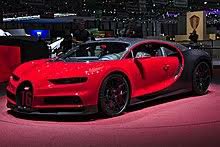
The distinctive quad LED headlights, for example, also serve as intakes routing air to the front brakes – and thus work as a remarkable example of functionality fusing with aesthetics. This enthusiasm for performance-oriented design continues in the interior, complemented by BUGATTI’s exquisite sense of comfort and luxury.
Mirroring the CHIRON´s exterior signature line, the LED illumination in the distinctive C-line form separates the two seats, and reveals the stunning functional beauty of the interior. The cockpit layout of the CHIRON gives the pilot all the necessary information within his range of vision. Proudly displaying the magic 500 km/h mark, the mechanical speedometer is a feast for the eyes. On the central console, milled from a single piece of solid aluminum, each unit has independent, adjustable displays.
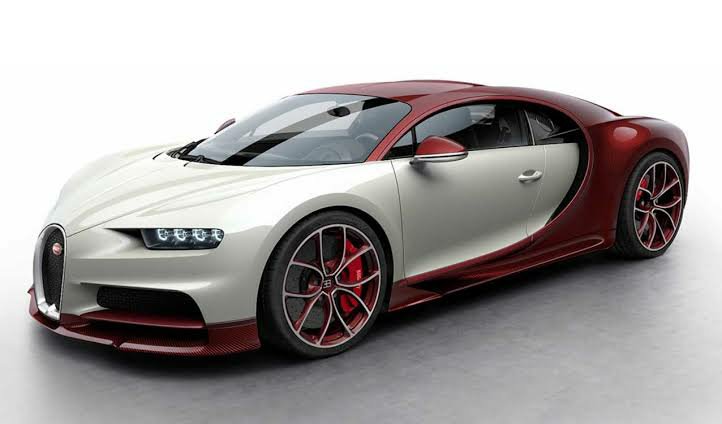
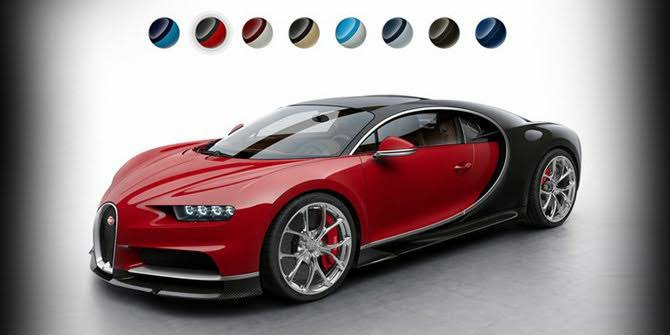
Each CHIRON is one of a kind; an exquisite masterpiece of breathtaking power and unrivalled beauty. To build each customer’s unique work of art, BUGATTI designers collaborate closely with the owner to create a car that fits their personality, while matching the brand’s captivating legend status and ardent commitment to utmost quality. There are virtually no limits to the levels of personalisation that can be achieved.
A vast selection of colour and material combinations is available, from the finest hand-picked leather to precious metals. Individual engravings or embroidery add the personalised finishing touch, making every CHIRON as unique as its owner. Below you can be inspired by a small selection of the countless possibilities available:
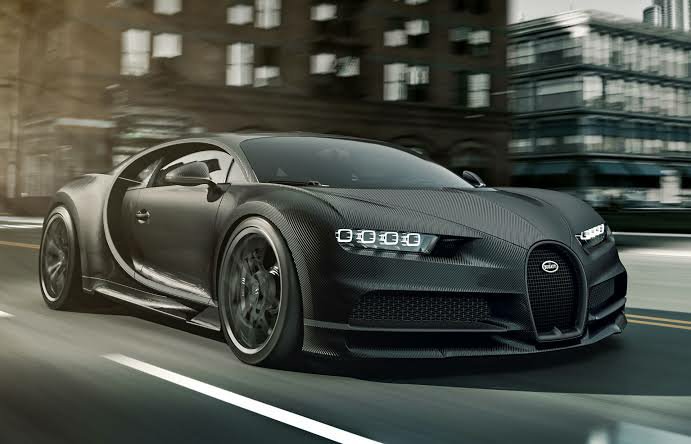
The heart of the CHIRON is its quad-turbocharged 8 l W16 engine. This unique masterpiece generates an incredible 1,500 hp and 1,600 Nm of torque, with an almost linear power output between 2,000 and 6,000 rpm. Four high-performing turbochargers work in a two-stage controlled configuration, and define this champion of performance. A remarkable 60,000 litres of air are pumped through the engine every minute.
Simultaneously, 800 litres of water per minute circulate through the CHIRON’s heart, and guarantee the cooling of the engine and generate the extraordinary power. The new titanium exhaust system, with reduced gas back pressure, boosts this performance further. To maximise the CHIRON’s engine power, lightweight materials, such as titan and carbon fibre, have been used wherever possible.
On 22 December 2000, Volkswagen officially incorporated Bugatti Automobiles S.A.S., with former VW drivetrain chief Karl-Heinz Neumann as president. The company purchased the 1856 Château Saint Jean, formerly Ettore Bugatti’s guest house in Dorlisheim, near Molsheim, and began refurbishing it to serve as the company’s headquarters. The original factory was still in the hands of Snecma, who were unwilling to part with it. At the Pebble Beach Concours d’Elegance in August 2000, VW announced that they would instead build a new modern atelier(factory) next to and south of the Château. The atelierwas officially inaugurated on 3 September 2005.
Bugatti Automobiles S.A.S. is a wholly owned subsidiary of the Volkswagen AG [5]
After the Veyron’s discontinuation in 2014, the new Bugatti model was revealed to be the Chiron in 2016. With an 8-liter W16 engine delivering 1500 horsepower, an electronically limited top speed of 261 miles per hour, and a price of about €2,400,000, the Chiron attempts to vastly surpass the Veyron’s performance.
Volkswagen commissioned Italdesign’s Giorgetto Giugiaro to design a series of concept cars to return the marque to prominence. The first example, the EB 118, was a two-door coupé and was introduced at the Paris Motor Show in 1998. It was followed by the four-door EB 218 touring sedan, introduced at the Geneva Motor Show in 1999. Later that year, the 18/3 Chiron was shown at the IAA in Frankfurt.
Volkswagen designsEdit
Volkswagen designed the final Bugatti concept, the EB 18/4 GT in house. Bugatti introduced the EB 18/4 at the 1999 Tokyo Motor Show.
W18 EngineEdit
All of these early concepts featured a 555 PS (408 kW; 547 hp) 18-cylinder engine. This was the first-ever W-configuration engine on a passenger vehicle, with three blocks of 6 cylinders each. It shared many components with Volkswagen’s modular engine family.
16C GalibierEdit
Main article: Bugatti 16C Galibier
The 16C Galibier was unveiled during Celebration of the Centenary of the Marque in Molsheim. The presentation was only for Bugatti customers. The car show in Molsheim showed the car in blue carbon fibre and aluminum parts. One year later Bugatti showed the world the 16C Galibier Concept at “VW Group Night” at the Geneva Auto Show in a new black and aluminum color combination.
The Galibier, a 1000 HP sedan, was first shown as a concept in 2010 and when they planned to put it into production in 2015, it would have cost about $1.4 million. It would use the same 16-cylinder 8.0-litre engine as the Veyron but instead of four turbos, the 16C Galibier would instead use two superchargers to deliver better torque. Production would require new facilities in Molsheim, France, to be refitted, which pushed back potential deliveries until 2015.[6]
In 2013, it was announced that the car will never be produced as they wish to focus on a Veyron replacement. ARTICLE BY GIRISH (20191MEC0098)
 Luxury cars