
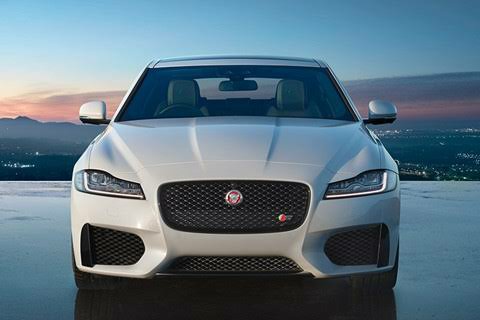
Jaguar Car Price
Jaguar cars price starts at Rs. 44.98 lakh for the cheapest car XE and goes up to Rs. 2.80 crore for the top model Jaguar F-TYPE. Jaguar offers 5 new car models in India. XE (Rs. 44.98 lakh), XJ (Rs. 1.11 crore) and F-TYPE (Rs. 90.93 lakh) are among the popular cars from Jaguar. In the year 2020/2021, Jaguar is going to launch 2 new models in India. Select a Jaguar car to know the latest offers in your city, prices, variants, specifications, pictures, mileage and reviews.
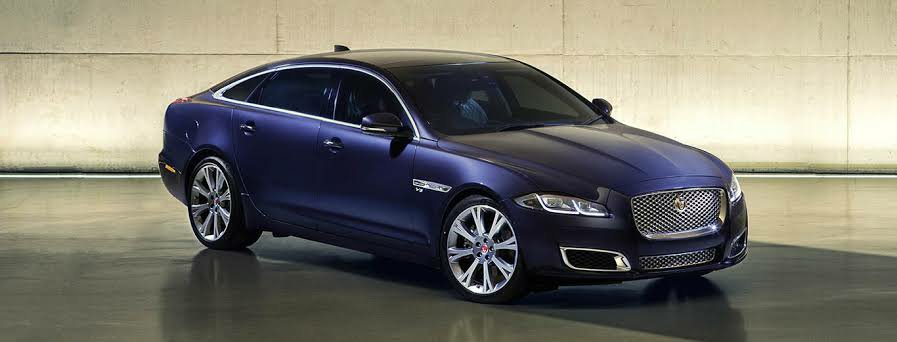
Jaguar was spun off from British Leyland and was listed on the London Stock Exchange in 1984, becoming a constituent of the FTSE 100 Index until it was acquired by Ford in 1990. Jaguar has, in recent years, manufactured cars for the British Prime Minister, the most recent delivery being an XJ in May 2010.The company also holds royal warrants from Queen Elizabeth II and Prince Charles.
In 1990 Ford acquired Jaguar Cars and it remained in their ownership, joined in 2000 by Land Rover, till 2008. Ford then sold both Jaguar and Land Rover to Tata Motors. Tata created Jaguar Land Rover as a subsidiary holding company. At operating company level, in 2013 Jaguar Cars was merged with Land Rover to form Jaguar Land Rover Limited as the single design, manufacture, sales company and brand owner for both Jaguar and Land Rover vehicles.
Since the Ford ownership era, Jaguar and Land Rover have used joint design facilities in engineering centres at Whitley in Coventry and Gaydon in Warwickshire and Jaguar cars have been assembled in plants at Castle Bromwich and Solihull.
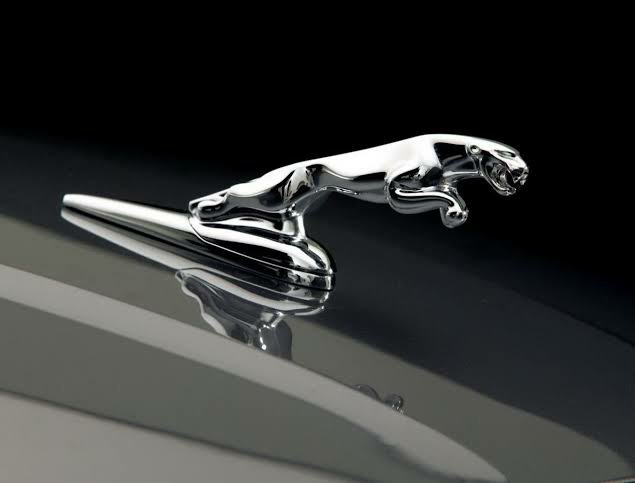
On 23 March 1945 the S. S. Cars shareholders in general meeting agreed to change the company’s name to Jaguar Cars Limited. Said chairman William Lyons “Unlike S. S. the name Jaguar is distinctive and cannot be connected or confused with any similar foreign name.”[9]
Though five years of pent-up demand ensured plenty of buyers production was hampered by shortage of materials, particularly steel, issued to manufacturers until the 1950s by a central planning authority under strict government control. Jaguar sold Motor Panels, a pressed steel body manufacturing company bought in the late 1930s, to steel and components manufacturer Rubery Owen,[10] and Jaguar bought from John Black’s Standard Motor Company the plant where Standard built Jaguar’s six-cylinder engines.[10]From this time Jaguar was entirely dependent for their bodies on external suppliers, in particular then independent Pressed Steel and in 1966 that carried them into BMC, BMH and British Leyland.
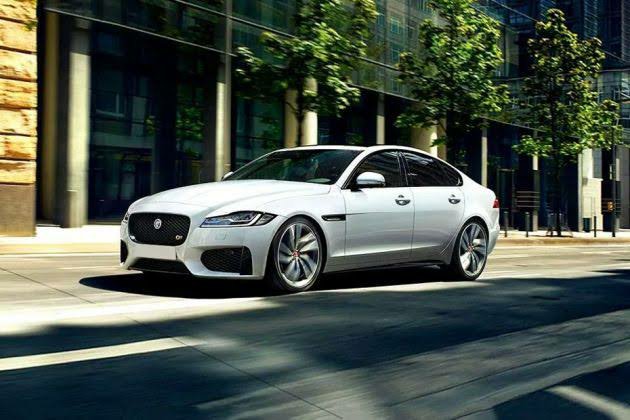
The main designer, William “Bill” Heynes, assisted by Walter “Wally” Hassan, was determined to develop the Twin OHC unit. Bill Lyons agreed over misgivings from Hassan. It was risky to take what had previously been considered a racing or low-volume and cantankerous engine needing constant fettling and apply it to reasonable volume production saloon cars.
The subsequent engine (in various versions) was the mainstay powerplant of Jaguar, used in the XK 120, Mk VII Saloon, Mk I and II Saloons and XK 140 and 150. It was also employed in the E Type, itself a development from the race winning and Le Mans conquering C and D Type Sports Racing cars refined as the short-lived XKSS, a road-legal D-Type.
Few engine types have demonstrated such ubiquity and longevity: Jaguar used the Twin OHC XK Engine, as it came to be known, in the Jaguar XJ6 saloon from 1969 through 1992, and employed in a J60 variant as the power plant in such diverse vehicles as the British Army’s Combat Vehicle Reconnaissance (Tracked) family of vehicles, as well as the Fox armoured reconnaissance vehicle, the Ferret Scout Car, and the Stonefield four-wheel-drive all-terrain lorry. Properly maintained, the standard production XK Engine would achieve 200,000 miles of useful life.
Two of the proudest moments in Jaguar’s long history in motor sport involved winning the Le Mans 24 hours race, firstly in 1951 and again in 1953. Victory at the 1955 Le Mans was overshadowed by it being the occasion of the worst motorsport accident in history. Later in the hands of the Scottish racing team Ecurie Ecosse two more wins were added in 1956 and 1957.
In spite of such a performance orientation, it was always Lyons’ intention to build the business by producing world-class sporting saloons in larger numbers than the sports car market could support. Jaguar secured financial stability and a reputation for excellence with a series of elegantly styled luxury saloons that included the 3-litre and 3½ litre cars, the Mark VII, VIII, and IX, the compact Mark I and 2, and the XJ6 and XJ12. All were deemed very good values, with comfortable rides, good handling, high performance, and great style.
Combined with the trend-setting XK 120, XK 140, and XK 150 series of sports car, and nonpareil E-Type,[citation needed] Jaguar’s elan as a prestige motorcar manufacturer had few rivals. The company’s post-War achievements are remarkable, considering both the shortages that drove Britain (the Ministry of Supply still allocated raw materials) and the state of metallurgical development of the era.
Daimler
In 1950, Jaguar agreed to lease from the Ministry of Supply the Daimler Shadow 2 factory in Browns Lane, Allesley, Coventry, which at the time was being used by The Daimler Company Limited and moved to the new site from Foleshill over the next 12 months.[17]Jaguar purchased Daimler – not to be confused with Daimler-Benz or Daimler AG—in 1960 from BSA. From the late 1960s, Jaguar used the Daimler marque as a brand name for their most luxurious saloons.[18]
Ownership
An end to independence
Pressed Steel Company Limited made all Jaguar’s (monocoque) bodies leaving provision and installation of the mechanicals to Jaguar. In mid-1965 British Motor Corporation (BMC), the Austin-Morris combine, bought Pressed Steel.[19] Lyons became concerned about the future of Jaguar, partly because of the threat to ongoing supplies of bodies, and partly because of his age and lack of an heir. He therefore accepted BMC’s offer to merge with Jaguar to form British Motor (Holdings) Limited.[20] At a press conference on 11 July 1965 at the Great Eastern Hotel in London, Lyons and BMC chairman George Harriman announced, “Jaguar Group of companies is to merge with The British Motor Corporation Ltd., as the first step towards the setting up of a joint holding company to be called British Motor (Holdings) Limited”. In due course BMC changed its name to British Motor Holdings[21] at the end of 1966.
BMH was pushed by the Government to merge with Leyland Motor Corporation Limited, manufacturer of Leyland bus and truck, Standard-Triumph and, since 1967, Rover vehicles. The result was British Leyland Motor Corporation, a new holding company which appeared in 1968, but the combination was not a success. A combination of poor decision making by the board along with the financial difficulties of, especially, the Austin-Morris division (previously BMC) led to the Ryder Report and to effective nationalisation in 1975.[citation needed]
Temporary return to independence
Over the next few years it became clear that because of the low regard for many of the group’s products insufficient capital could be provided to develop and begin manufacture of new models, including Jaguars, particularly if Jaguar were to remain a part of the group AN ARTICLE BY GIRISH(20191MEC0098)
 Luxury cars