JAGUAR

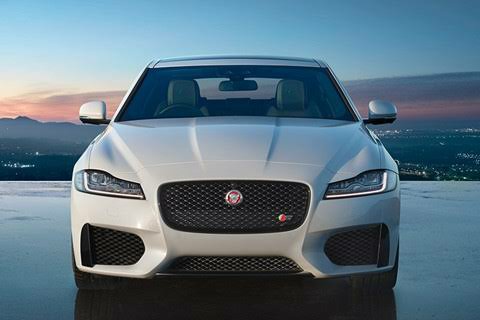
Jaguar  is the luxury vehicle brand of Jaguar Land Rover,[1][2] a British multinational car manufacturer with its headquarters in Whitley, Coventry, England. Jaguar Cars was the company that was responsible for the production of Jaguar cars until its operations were fully merged with those of Land Rover to form Jaguar Land Rover on 1 January 2013.The vehicles offered by Jaguar are for those who enjoy the finer tastes in life. For enthusiasts and Jaguar aficionados, photos and technical specifications further fuel the desire to understand and gain more knowledge on their favourite vehicle.
Jaguar Car Price
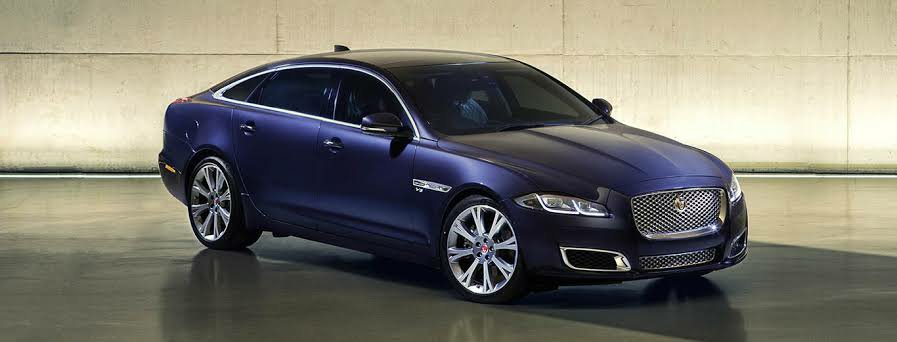
Jaguar cars price starts at Rs. 44.98 lakh for the cheapest car XE and goes up to Rs. 2.80 crore for the top model Jaguar F-TYPE. Jaguar offers 5 new car models in India. XE (Rs. 44.98 lakh), XJ (Rs. 1.11 crore) and F-TYPE (Rs. 90.93 lakh) are among the popular cars from Jaguar. In the year 2020/2021, Jaguar is going to launch 2 new models in India. Select a Jaguar car to know the latest offers in your city, prices, variants, specifications, pictures, mileage and reviews.
Jaguar’s business was founded as the Swallow Sidecar Company in 1922, originally making motorcycle sidecars before developing bodies for passenger cars. Under the ownership of S. S. Cars Limited the business extended to complete cars made in association with Standard Motor Co, many bearing Jaguar as a model name. The company’s name was changed from S. S. Cars to Jaguar Cars in 1945. A merger with the British Motor Corporationfollowed in 1966,[3] the resulting enlarged company now being renamed as British Motor Holdings (BMH), which in 1968 merged with Leyland Motor Corporation and became British Leyland, itself to be nationalised in 1975.
Jaguar was spun off from British Leyland and was listed on the London Stock Exchange in 1984, becoming a constituent of the FTSE 100 Index until it was acquired by Ford in 1990. Jaguar has, in recent years, manufactured cars for the British Prime Minister, the most recent delivery being an XJ in May 2010.The company also holds royal warrants from Queen Elizabeth II and Prince Charles.
In 1990 Ford acquired Jaguar Cars and it remained in their ownership, joined in 2000 by Land Rover, till 2008. Ford then sold both Jaguar and Land Rover to Tata Motors. Tata created Jaguar Land Rover as a subsidiary holding company. At operating company level, in 2013 Jaguar Cars was merged with Land Rover to form Jaguar Land Rover Limited as the single design, manufacture, sales company and brand owner for both Jaguar and Land Rover vehicles.
Since the Ford ownership era, Jaguar and Land Rover have used joint design facilities in engineering centres at Whitley in Coventry and Gaydon in Warwickshire and Jaguar cars have been assembled in plants at Castle Bromwich and Solihull.
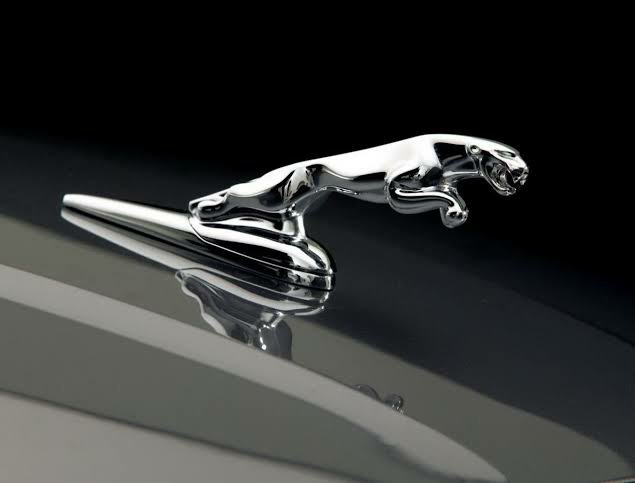
Jaguar first appeared in September 1935 as a model name on an SS 2½-litre sports saloon.[7][8] A matching open two seater sports model with a 3½-litre engine was named SS Jaguar 100.
On 23 March 1945 the S. S. Cars shareholders in general meeting agreed to change the company’s name to Jaguar Cars Limited. Said chairman William Lyons “Unlike S. S. the name Jaguar is distinctive and cannot be connected or confused with any similar foreign name.”[9]
Though five years of pent-up demand ensured plenty of buyers production was hampered by shortage of materials, particularly steel, issued to manufacturers until the 1950s by a central planning authority under strict government control. Jaguar sold Motor Panels, a pressed steel body manufacturing company bought in the late 1930s, to steel and components manufacturer Rubery Owen,[10] and Jaguar bought from John Black’s Standard Motor Company the plant where Standard built Jaguar’s six-cylinder engines.[10]From this time Jaguar was entirely dependent for their bodies on external suppliers, in particular then independent Pressed Steel and in 1966 that carried them into BMC, BMH and British Leyland.
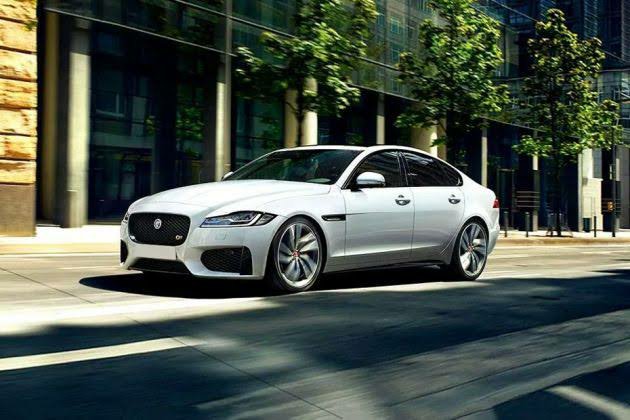
As fuel octane ratings were relatively low from 1948 onwards, three piston configuration were offered: domed (high octane), flat (medium octane), and dished (low octane).
The main designer, William “Bill” Heynes, assisted by Walter “Wally” Hassan, was determined to develop the Twin OHC unit. Bill Lyons agreed over misgivings from Hassan. It was risky to take what had previously been considered a racing or low-volume and cantankerous engine needing constant fettling and apply it to reasonable volume production saloon cars.
The subsequent engine (in various versions) was the mainstay powerplant of Jaguar, used in the XK 120, Mk VII Saloon, Mk I and II Saloons and XK 140 and 150. It was also employed in the E Type, itself a development from the race winning and Le Mans conquering C and D Type Sports Racing cars refined as the short-lived XKSS, a road-legal D-Type.
Few engine types have demonstrated such ubiquity and longevity: Jaguar used the Twin OHC XK Engine, as it came to be known, in the Jaguar XJ6 saloon from 1969 through 1992, and employed in a J60 variant as the power plant in such diverse vehicles as the British Army’s Combat Vehicle Reconnaissance (Tracked) family of vehicles, as well as the Fox armoured reconnaissance vehicle, the Ferret Scout Car, and the Stonefield four-wheel-drive all-terrain lorry. Properly maintained, the standard production XK Engine would achieve 200,000 miles of useful life.
Two of the proudest moments in Jaguar’s long history in motor sport involved winning the Le Mans 24 hours race, firstly in 1951 and again in 1953. Victory at the 1955 Le Mans was overshadowed by it being the occasion of the worst motorsport accident in history. Later in the hands of the Scottish racing team Ecurie Ecosse two more wins were added in 1956 and 1957.
In spite of such a performance orientation, it was always Lyons’ intention to build the business by producing world-class sporting saloons in larger numbers than the sports car market could support. Jaguar secured financial stability and a reputation for excellence with a series of elegantly styled luxury saloons that included the 3-litre and 3½ litre cars, the Mark VII, VIII, and IX, the compact Mark I and 2, and the XJ6 and XJ12. All were deemed very good values, with comfortable rides, good handling, high performance, and great style.
Combined with the trend-setting XK 120, XK 140, and XK 150 series of sports car, and nonpareil E-Type,[citation needed] Jaguar’s elan as a prestige motorcar manufacturer had few rivals. The company’s post-War achievements are remarkable, considering both the shortages that drove Britain (the Ministry of Supply still allocated raw materials) and the state of metallurgical development of the era.
Daimler
In 1950, Jaguar agreed to lease from the Ministry of Supply the Daimler Shadow 2 factory in Browns Lane, Allesley, Coventry, which at the time was being used by The Daimler Company Limited and moved to the new site from Foleshill over the next 12 months.[17]Jaguar purchased Daimler – not to be confused with Daimler-Benz or Daimler AG—in 1960 from BSA. From the late 1960s, Jaguar used the Daimler marque as a brand name for their most luxurious saloons.[18]
Ownership
An end to independence
Pressed Steel Company Limited made all Jaguar’s (monocoque) bodies leaving provision and installation of the mechanicals to Jaguar. In mid-1965 British Motor Corporation (BMC), the Austin-Morris combine, bought Pressed Steel.[19] Lyons became concerned about the future of Jaguar, partly because of the threat to ongoing supplies of bodies, and partly because of his age and lack of an heir. He therefore accepted BMC’s offer to merge with Jaguar to form British Motor (Holdings) Limited.[20] At a press conference on 11 July 1965 at the Great Eastern Hotel in London, Lyons and BMC chairman George Harriman announced, “Jaguar Group of companies is to merge with The British Motor Corporation Ltd., as the first step towards the setting up of a joint holding company to be called British Motor (Holdings) Limited”. In due course BMC changed its name to British Motor Holdings[21] at the end of 1966.
BMH was pushed by the Government to merge with Leyland Motor Corporation Limited, manufacturer of Leyland bus and truck, Standard-Triumph and, since 1967, Rover vehicles. The result was British Leyland Motor Corporation, a new holding company which appeared in 1968, but the combination was not a success. A combination of poor decision making by the board along with the financial difficulties of, especially, the Austin-Morris division (previously BMC) led to the Ryder Report and to effective nationalisation in 1975.[citation needed]
Temporary return to independence
Over the next few years it became clear that because of the low regard for many of the group’s products insufficient capital could be provided to develop and begin manufacture of new models, including Jaguars, particularly if Jaguar were to remain a part of the group AN ARTICLE BY GIRISH(20191MEC0098)
BUGATTI

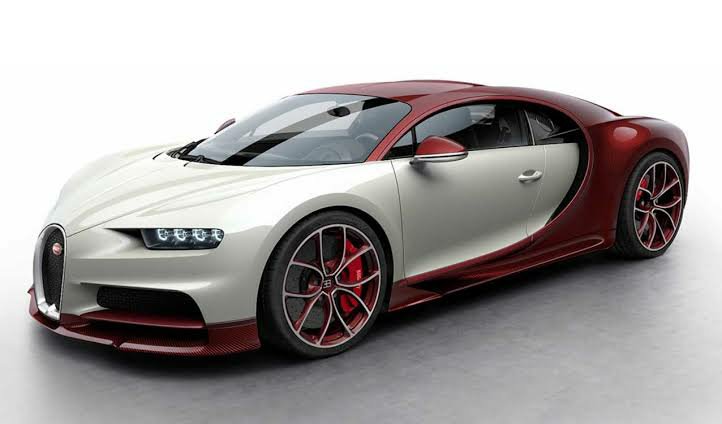
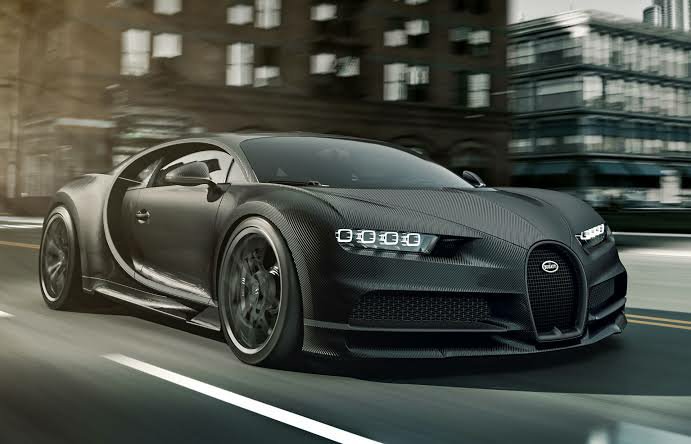
To reach its unprecedented levels of performance, the CHIRON effortlessly merges its captivating beauty with sleek, muscular efficiency; a spectacular reinterpretation of the BUGATTI design DNA. The intelligent air intake management significantly improves aerodynamics and enhances the cooling efficiency for engine and brakes.
The distinctive quad LED headlights, for example, also serve as intakes routing air to the front brakes – and thus work as a remarkable example of functionality fusing with aesthetics. This enthusiasm for performance-oriented design continues in the interior, complemented by BUGATTI’s exquisite sense of comfort and luxury.
Mirroring the CHIRON´s exterior signature line, the LED illumination in the distinctive C-line form separates the two seats, and reveals the stunning functional beauty of the interior. The cockpit layout of the CHIRON gives the pilot all the necessary information within his range of vision. Proudly displaying the magic 500 km/h mark, the mechanical speedometer is a feast for the eyes. On the central console, milled from a single piece of solid aluminum, each unit has independent, adjustable displays.
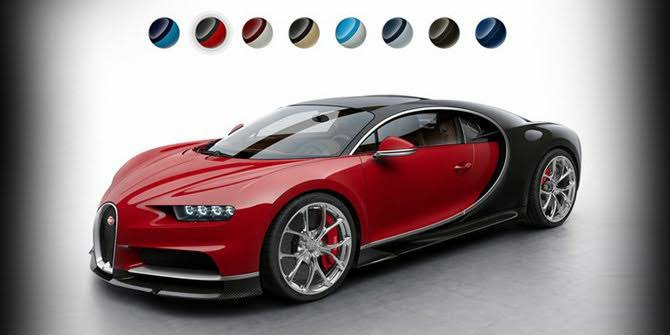
Each CHIRON is one of a kind; an exquisite masterpiece of breathtaking power and unrivalled beauty. To build each customer’s unique work of art, BUGATTI designers collaborate closely with the owner to create a car that fits their personality, while matching the brand’s captivating legend status and ardent commitment to utmost quality. There are virtually no limits to the levels of personalisation that can be achieved.
A vast selection of colour and material combinations is available, from the finest hand-picked leather to precious metals. Individual engravings or embroidery add the personalised finishing touch, making every CHIRON as unique as its owner. Below you can be inspired by a small selection of the countless possibilities available:
ENGINEERING
The heart of the CHIRON is its quad-turbocharged 8 l W16 engine. This unique masterpiece generates an incredible 1,500 hp and 1,600 Nm of torque, with an almost linear power output between 2,000 and 6,000 rpm. Four high-performing turbochargers work in a two-stage controlled configuration, and define this champion of performance. A remarkable 60,000 litres of air are pumped through the engine every minute.
Simultaneously, 800 litres of water per minute circulate through the CHIRON’s heart, and guarantee the cooling of the engine and generate the extraordinary power. The new titanium exhaust system, with reduced gas back pressure, boosts this performance further. To maximise the CHIRON’s engine power, lightweight materials, such as titan and carbon fibre, have been used wherever possible.
At the urging of then-chairman Ferdinand Piëch, Volkswagen purchased the rights to produce cars under the Bugatti marque in June 1998. This followed the earlier Volkswagen purchases of the Lamborghinimarque (by VW’s Audi subsidiary), the Rolls-Roycefactory in Crewe, United Kingdom, and the Bentleymarque.
On 22 December 2000, Volkswagen officially incorporated Bugatti Automobiles S.A.S., with former VW drivetrain chief Karl-Heinz Neumann as president. The company purchased the 1856 Château Saint Jean, formerly Ettore Bugatti’s guest house in Dorlisheim, near Molsheim, and began refurbishing it to serve as the company’s headquarters. The original factory was still in the hands of Snecma, who were unwilling to part with it. At the Pebble Beach Concours d’Elegance in August 2000, VW announced that they would instead build a new modern atelier(factory) next to and south of the Château. The atelierwas officially inaugurated on 3 September 2005.
Bugatti Automobiles S.A.S. is a wholly owned subsidiary of the Volkswagen AG [5]
After the Veyron’s discontinuation in 2014, the new Bugatti model was revealed to be the Chiron in 2016. With an 8-liter W16 engine delivering 1500 horsepower, an electronically limited top speed of 261 miles per hour, and a price of about €2,400,000, the Chiron attempts to vastly surpass the Veyron’s performance.
Italdesign Giugiaro designsEdit
Volkswagen commissioned Italdesign’s Giorgetto Giugiaro to design a series of concept cars to return the marque to prominence. The first example, the EB 118, was a two-door coupé and was introduced at the Paris Motor Show in 1998. It was followed by the four-door EB 218 touring sedan, introduced at the Geneva Motor Show in 1999. Later that year, the 18/3 Chiron was shown at the IAA in Frankfurt.
Volkswagen designsEdit
Volkswagen designed the final Bugatti concept, the EB 18/4 GT in house. Bugatti introduced the EB 18/4 at the 1999 Tokyo Motor Show.
W18 EngineEdit
All of these early concepts featured a 555 PS (408 kW; 547 hp) 18-cylinder engine. This was the first-ever W-configuration engine on a passenger vehicle, with three blocks of 6 cylinders each. It shared many components with Volkswagen’s modular engine family.
16C GalibierEdit
Main article: Bugatti 16C Galibier
The 16C Galibier was unveiled during Celebration of the Centenary of the Marque in Molsheim. The presentation was only for Bugatti customers. The car show in Molsheim showed the car in blue carbon fibre and aluminum parts. One year later Bugatti showed the world the 16C Galibier Concept at “VW Group Night” at the Geneva Auto Show in a new black and aluminum color combination.
The Galibier, a 1000 HP sedan, was first shown as a concept in 2010 and when they planned to put it into production in 2015, it would have cost about $1.4 million. It would use the same 16-cylinder 8.0-litre engine as the Veyron but instead of four turbos, the 16C Galibier would instead use two superchargers to deliver better torque. Production would require new facilities in Molsheim, France, to be refitted, which pushed back potential deliveries until 2015.[6]
In 2013, it was announced that the car will never be produced as they wish to focus on a Veyron replacement. ARTICLE BY GIRISH (20191MEC0098)

FERRARI

In 2014 Ferrari was rated the world’s most powerful brand by Brand Finance.[3] In June 2018, the 1964 250 GTO became the most expensive car in history, setting an all-time record selling price of $70 million.[4][5]
Fiat S.p.A. acquired 50% of Ferrari in 1969 and expanded its stake to 90% in 1988.[6] In October 2014 Fiat Chrysler Automobiles N.V. (FCA) announced its intentions to separate Ferrari S.p.A. from FCA; as of the announcement FCA owned 90% of Ferrari.[7][8][9]The separation began in October 2015 with a restructuring that established Ferrari N.V. (a company incorporated in the Netherlands) as the new holding company of the Ferrari group and the subsequent sale by FCA of 10% of the shares in an IPO and concurrent listing of common shares on the New York Stock Exchange.[10] Through the remaining steps of the separation, FCA’s interest in Ferrari’s business was distributed to shareholders of FCA, with 10% continuing to be owned by Piero Ferrari.[11]The spin-off was completed on 3 January 2016.[10]
Throughout its history, the company has been noted for its continued participation in racing, especially in Formula One, where it is the oldest and most successful racing team, holding the most constructors championships (16) and having produced the highest number of drivers’ championship wins (15).[12] Ferrari road cars are generally seen as a symbol of speed, luxury and wealth.[13]
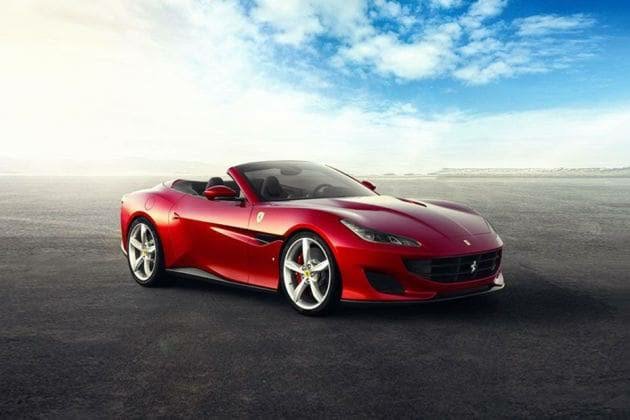
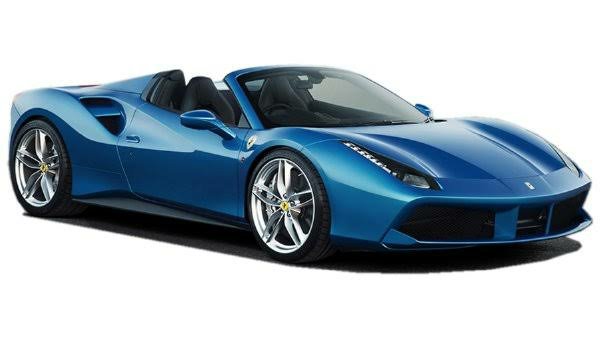
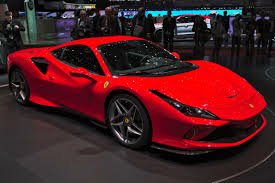
Enzo Ferrari raced for Fiat and Alfa Romeo before forming his own racing team in 1932. The first Ferrari-created car was based on a Fiat chassis, but after the war he had created his own cars, featuring tiny V12s and delicate barchetta bodywork. Ferrari sold road cars to finance his racing operations, definitely not the other way around. The notoriously prickly Enzo built an empire but occasionally lost talented employees, either fired or driven off, who formed other competing outfits. One frustrated customer was Ferruccio Lamborghini, incidentally. Ferrari’s outsized personality, however, created a high-performance dynasty of some of the most valuable and fantastic cars ever built, as well as significant success in various forms of motorsport. The current Ferrari lineup includes the California T, the GTC4Lusso, 488 GTB, F12tdf and 812 Superfast, as well as the LaFerrari hybrid hypercar.
The seven teams – Mercedes, Red Bull, McLaren, Racing Point, Renault, AlphaTauri and Williams – issued a strongly worded statement on Wednesday. The only rival teams who did not contribute were Alfa Romeo and Haas, both of whom use Ferrari engines.
“We, the undersigned teams, were surprised and shocked by the FIA’s statement of 28 February regarding the conclusion of its investigation into the Scuderia Ferrari Formula One power unit,” the statement said.
“After months of investigations that were undertaken by the FIA only following queries raised by other teams, we strongly object to the FIA reaching a confidential settlement agreement with Ferrari to conclude this matter.”
Ferrari are yet to release any official comment on the FIA’s statement, or the seven teams’ protests. With the F1 paddock now heading to Australia for the first round in Melbourne on 15 March, further reaction is not expected until early next
ARTICLE BY GIRISH (20191MEC0098)